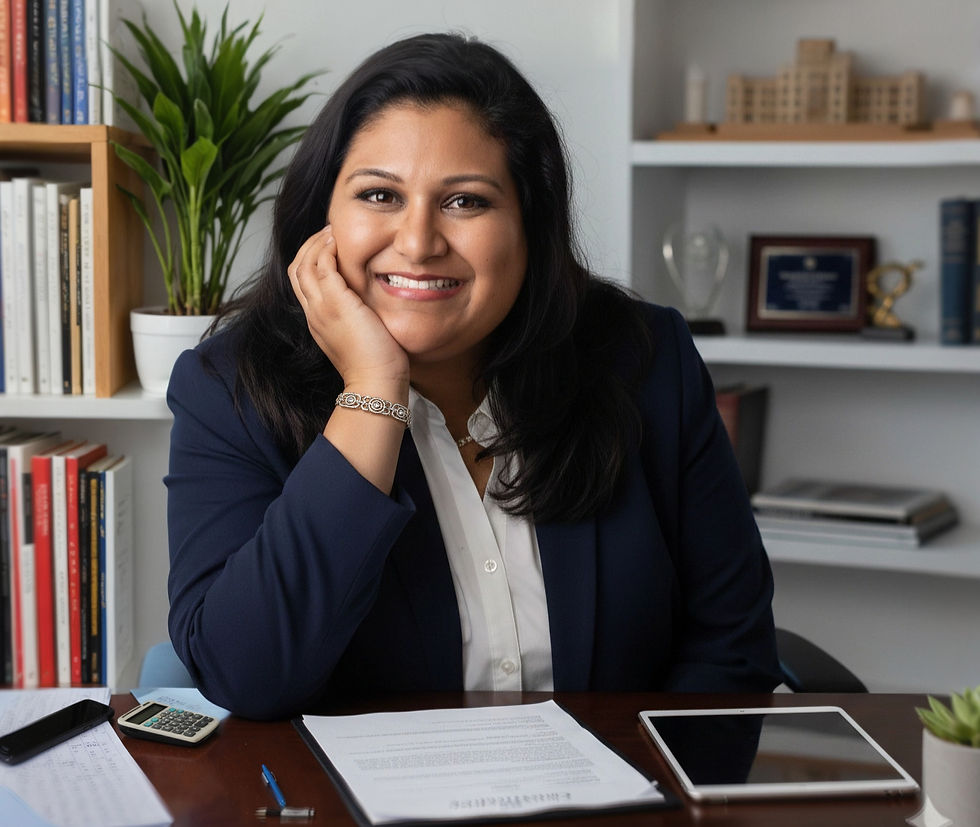
If There Is No Door, Build One: Ms Amira Fouad, CEO of Encore! Performing Arts & Music, Dubai breaks barriers
Disclaimer: The information provided on this blog is for educational and informational purposes only. The views and opinions expressed are those of the author and do not necessarily reflect those of any affiliated organizations. Readers are encouraged to conduct their own research and consult qualified professionals before making any decisions based on the information provided. The author and publisher assume no responsibility or liability for any errors, omissions, or outcomes resulting from the use of this information. While every effort is made to ensure the accuracy and reliability of the content, it should not be considered as professional, legal, financial, medical, or other expert advice. Content on this blog is intended for educational purposes only and should not be taken as professional advice. Use of the information is at your own discretion.

The Performing Arts are often seen as a world of talent and passion, far removed from the discipline of running a business. My conversation with Ms. Amira Fouad, CEO and Founder of Encore! Performing Arts and Music LLC, told a different story. A concert pianist and music educator by training, Ms. Fouad has spent the past few years building Encore! into one of Dubai's most ambitious performing arts institutions. What came through most clearly in our conversation was that the qualities behind that growth were not really musical ones. They were entrepreneurial: resilience, financial discipline, and a willingness to build something where nothing existed before.
Before moving to Dubai, Ms. Fouad had spent years performing and teaching at a conservatory abroad. When she arrived in the UAE, she found no equivalent institution, and no real path for young musicians who wanted to train at a higher level. So she built one. Encore! started in 2016 with just four students. Today, its performers have shared a stage at Carnegie Hall. Getting there took real financial risk in the early years, money spent on faculty, venues, and programmes long before there was an audience to support them. What carried the organisation through, was not easy circumstances but a clear sense of purpose that made the risk feel worth taking.
That same conviction was tested again during periods of regional instability in the UAE, when venues fell through and rehearsal spaces became unavailable with little warning. The team's instinct was never to stop. Every setback became a problem to solve, the question shifting from whether to continue to simply where. That kind of adaptability did not happen by chance. It came from a culture built deliberately around resilience and long-term thinking, and Ms. Fouad believes it is exactly this kind of culture that separates organisations built to last from those that only do well when things are easy.
Building a true cultural institution, rather than just an events company, means thinking differently about time. Events come and go. An institution sustains itself in the standards it holds year after year and in the relationships it builds across its industry. Dubai Opera has become like a home ground for Encore! and performing there again and again, across fifteen concerts and counting, taught the team things that could not have been learned any other way: how things work at scale, what protocol looks like, the quiet confidence of having done it before. That groundwork is part of what made Carnegie Hall possible. Choosing to perform only at the most prestigious venues was never about image. It was about holding a standard that builds on itself over time.
That same idea runs through how Ms. Fouad thinks about success more broadly. Revenue matters, and she is honest that nothing else is possible without it. But the measures she returns to most naturally are not financial ones. One is how happy her faculty are in their work, because a team that feels genuinely fulfilled brings something into the classroom that cannot be taught or replicated, and students feel that. Another is recognition from bodies like the Ministry of Culture and Dubai Culture as a sign of trust earned over years. The measure that matters most though is simple: students who go on to pursue music seriously. One student is now preparing to study music alongside computer science at Stanford which, to Ms. Fouad, says everything about what Encore! set out to do. It shows that a real musical education and a real future are not at odds with each other.
Leading this kind of organisation as a woman has come with its own questions. She describes Dubai as a genuinely open place to work, and when asked about bias, her honest answer is that passion tends to crowd it out. When the work asks everything of you, there is little room left to dwell on the obstacles. What she tells young women hoping to lead in the arts is simple and practical: get experience wherever you can find it, ask for help, and stay close to people you admire. Confidence, in her view, is not something you wait for- it is something you build by doing the work.
She is just as direct about the business side of things. Artistic excellence and financial discipline are not in tension. Knowing where the money is going, not spending more than what is coming in, and resisting the urge to grow before the foundation is solid are what separate organisations that last from those that don't. Overspending is the mistake she sees most often in young founders. And where her own knowledge runs out, her instinct is simple: find someone who knows better. No one can be good at everything, and the real skill lies in knowing your limits and hiring around them.
For students drawn to the crossing point of arts, business, and entrepreneurship, her advice is to stay grounded. Technical knowledge matters, but it is never enough on its own. The students who stay with music are not always the most gifted ones: they are the ones who have figured out what success actually means to them, and whose sense of that is strong enough to carry them through the harder stretches. That kind of self-knowledge is not something a teacher can hand a student. It is something a good teacher can help them find.
What this conversation made clear is that building a cultural institution is an act of belief sustained over time and in the quiet power of doing things well, again and again. The Carnegie Hall performance was not luck. It was four students becoming many, a team that found new ground to rehearse on when the old ground gave way, and a founder who built a door where none existed.